BazelCon 2026 recap
 Post
October 21, 2026
36 min read
Post
October 21, 2026
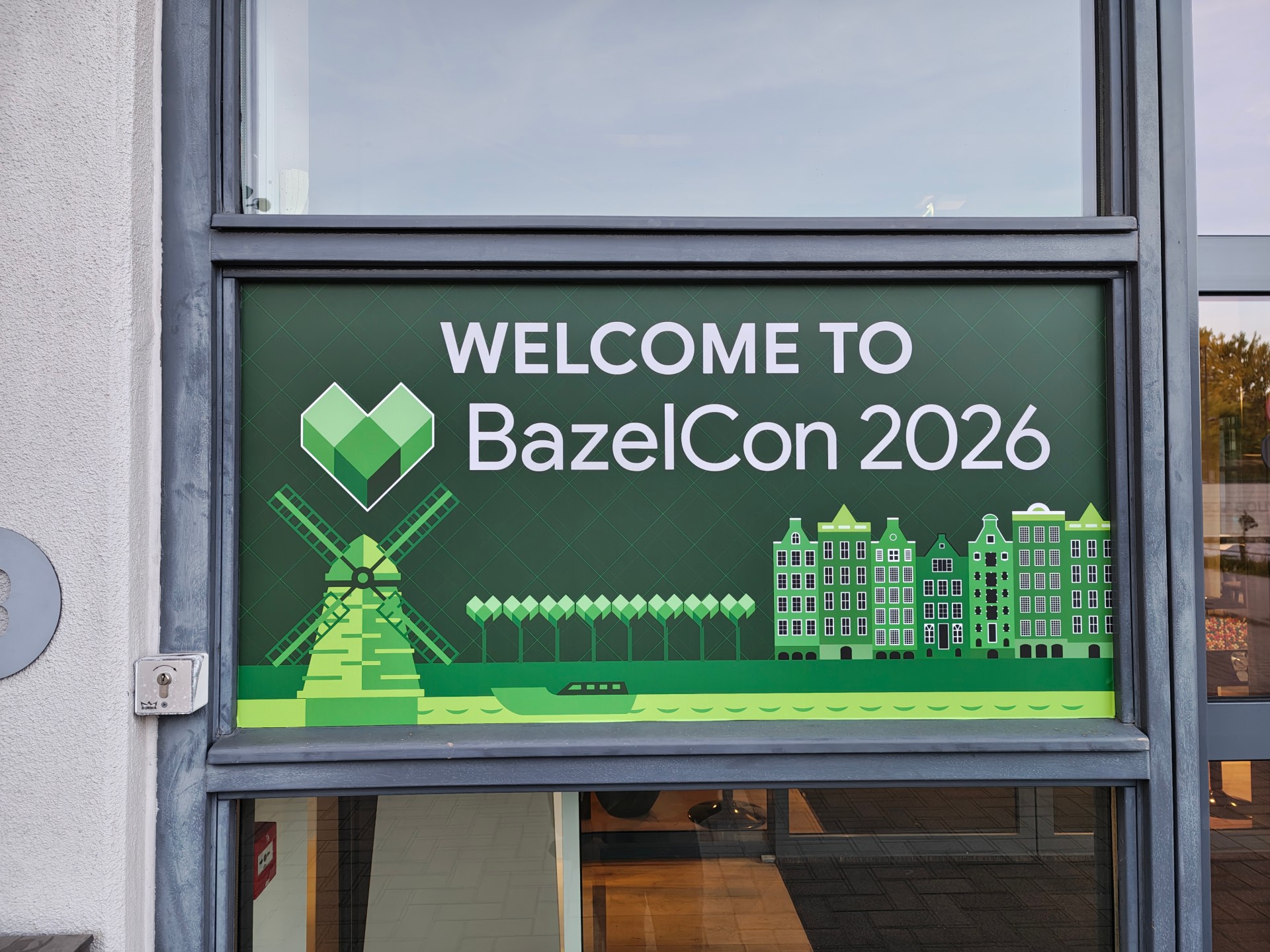
36 min readWe are right in the middle of fall, and that means BazelCon 2026 just took place. This time around it was hosted in Amsterdam and spanned three days: one day of tutorials and an overlapping Buildbarn meetup that I wasn’t aware of, and two days of main-conference talks and events. And as the event is behind us, it’s time for the now-traditional recap.
What follows is a recollection of my notes arranged by topic and intermixed with my own commentary and thoughts. Some sections and topics are more detailed than others because in some cases I didn’t have a seat and couldn’t type enough, and in others I got distracted in the hallways chatting with people. Speaking of people, several of you approached me to praise previous editions of these recaps, so I now feel obliged to write another one. Thanks for the kind comments!
As we will see, “scale” was a central theme of the conference: AI is multiplying concurrent builds and tests, artifacts and graphs are growing at an accelerated pace due to new features like configuration transitions, and the ecosystem is responding by making execution, caching, and analysis more efficient.